

At VSI Risk Management & Ergonomics, Inc., we frequently help organizations identify ergonomic risk factors within office environments and implement solutions that improve both employee well-being and overall operational performance. Through professional workplace ergonomic assessments, companies can create safer, more productive work environments while reducing injury risks.
Recent studies and workplace data clearly demonstrate that ergonomic assessments can lead to meaningful productivity gains across office-based workforces.
Productivity Gains Following Ergonomic Evaluations

Multiple studies examining office ergonomics interventions have found consistent improvements in productivity when ergonomic risks are addressed.
Research indicates:
- 10–20% productivity improvements when employees have access to ergonomic workstations.
- Employees complete tasks up to 15% faster in ergonomically optimized work environments.
- Structured ergonomic assessments have resulted in 19% improvements in self-reported productivity among office employees.
- Specific workstation improvements, such as ergonomic chairs and adjustable workstations, have shown productivity increases of up to 17% or more in office settings.
These improvements occur because ergonomic interventions reduce physical strain, allowing employees to maintain focus and work more efficiently throughout the day.
Organizations looking to optimize productivity often implement comprehensive ergonomic consulting programs similar to those offered by VSI’s ergonomic consulting services.
Reduced Injuries and Lost Workdays

In addition to productivity improvements, ergonomic programs significantly reduce workplace injuries and absenteeism.
- 61% reductions in musculoskeletal injuries
- 88% reductions in lost workdays related to ergonomic issues
- Significant reductions in restricted duty assignments
These improvements directly translate to greater workforce availability and improved operational continuity.
Musculoskeletal discomfort remains one of the leading causes of workplace absenteeism in office environments, and ergonomic evaluations play a critical role in mitigating these risks.
Why Ergonomics Improves Productivity
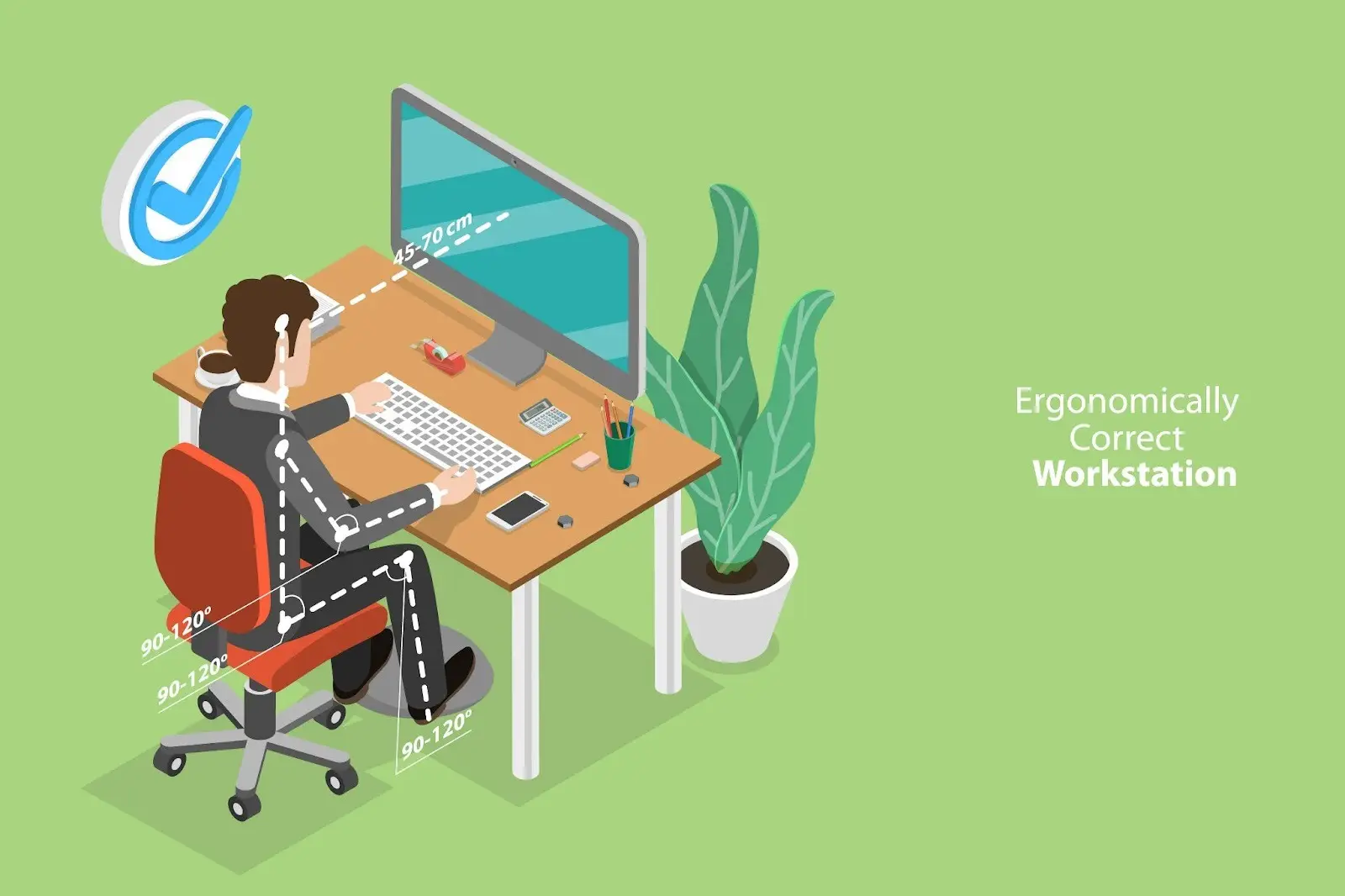
Ergonomic evaluations focus on optimizing the relationship between the worker and their work environment. When properly implemented, office ergonomics improvements can:
- Reduce physical fatigue and discomfort
- Improve posture and workstation alignment
- Minimize repetitive strain and awkward movements
- Improve employee concentration and engagement
- Reduce the number of errors during work tasks
By addressing these factors, employees are able to perform tasks more efficiently and maintain higher performance levels throughout the workday.
The Economic Value of Ergonomic Programs

Beyond productivity improvements, ergonomic interventions consistently demonstrate strong returns on investment.
Organizations that implement ergonomic programs frequently experience:
- Lower workers’ compensation costs
- Reduced absenteeism
- Higher employee retention
- Improved employee morale and job satisfaction
In many cases, ergonomic improvements pay for themselves quickly due to the combined benefits of productivity gains and injury prevention.
Ergonomic Evaluations as a Strategic Investment

For organizations seeking to improve both employee health and operational performance, ergonomic evaluations represent a practical and cost-effective solution.
A well-structured ergonomic assessment program can identify risk factors that may otherwise go unnoticed and provide targeted recommendations that benefit both employees and employers.
At VSI Risk Management & Ergonomics, Inc., our ergonomic consultants work with organizations to evaluate workstations, identify risk factors, and implement solutions that improve comfort, efficiency, and productivity.
Frequently Asked Questions
1. What is an office ergonomic evaluation?
An office ergonomic evaluation is an assessment of an employee’s workstation, posture, and work habits to identify risk factors that may cause discomfort, fatigue, or injury, and to recommend improvements for better health and productivity.
2. How do ergonomic improvements increase productivity?
Ergonomic improvements reduce physical strain, improve posture, and make workstations more comfortable, allowing employees to maintain focus, work faster, and perform tasks more efficiently.
3. What types of changes are typically recommended after an ergonomic assessment?
Common recommendations include adjustable chairs, proper monitor height, ergonomic keyboards or mice, improved desk layout, and guidance on posture and workstation setup.
4. Are ergonomic programs cost-effective for businesses?
Yes. Many organizations see a strong return on investment through increased productivity, reduced absenteeism, fewer workplace injuries, and lower workers’ compensation costs.
Conclusion
The data is clear: investing in ergonomic evaluations is not only a workplace health initiative, it is also a productivity strategy.
Organizations that proactively address ergonomic risks in office environments can expect measurable improvements in employee performance, reduced injury rates, and stronger overall business outcomes.
As companies continue to prioritize efficiency and employee well-being, ergonomic evaluations remain one of the most effective tools for achieving both.