
Table of Contents
- Flexible & Shared Workspaces Are the New Standard
- Sit-Stand Workstations Continue to Gain Momentum
- Hybrid Work Requires Smarter Ergonomic Solutions
- Biophilic Design Is Improving Employee Well-Being
- Technology Is Revolutionizing Ergonomics
- Employee Wellness Is Now a Workplace Design Priority
- Inclusive Workplace Design Benefits Everyone
- Privacy and Acoustics Matter More Than Ever
- Investing in the Future of Work
- Frequently Asked Questions
The modern workplace has undergone a dramatic transformation over the past several years. Gone are the days when every employee sat at the same desk in a row of cubicles from 8 a.m. to 5 p.m. Today’s offices are designed to be more flexible, collaborative, and employee-focused than ever before. As organizations continue to adapt to hybrid work, evolving technology, and increased attention to employee well-being, ergonomics has become a central component of workplace design, not an afterthought.
At VSI Risk Management & Ergonomics, Inc., we work with organizations to create work environments that reduce injury risk, improve comfort, and enhance productivity. The latest office trends reinforce what ergonomics professionals have known for years: when employees are comfortable and supported, they perform at their best. Below, we break down the office ergonomics trends shaping workplace design, and what each one means for comfort, injury prevention, and long-term performance.
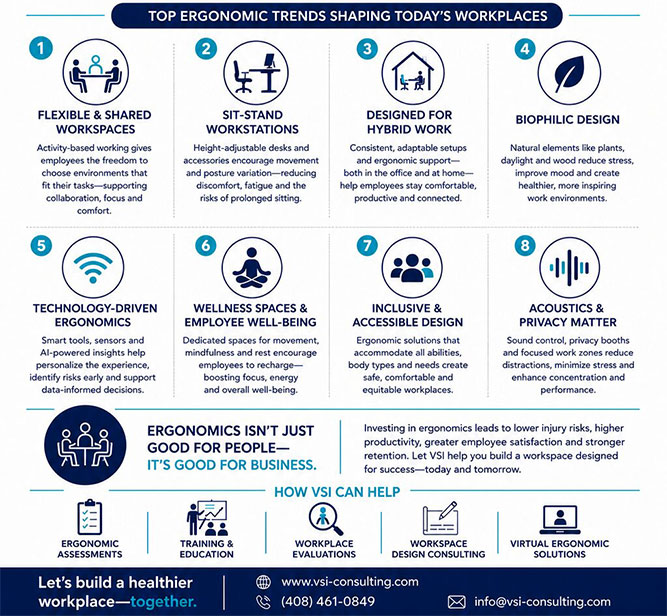
1. Flexible & Shared Workspaces Are the New Standard
One of the biggest trends reshaping office environments is the move toward activity-based working (ABW). Rather than assigning employees a permanent desk, organizations are creating a variety of workspaces designed for different tasks.
These spaces often include:
- Quiet focus rooms
- Open collaboration areas
- Standing meeting spaces
- Lounge seating
- Phone booths
- Shared workstations
This flexibility allows employees to choose the environment that best fits the work they’re doing. However, it also means workstations must accommodate people of different heights, body types, and preferences.
That’s why adjustable ergonomic furniture including sit-stand desks, monitor arms, and highly adjustable office chairs is becoming an essential investment. A short workstation assessment helps match each shared desk to the person using it, so activity-based working delivers comfort along with flexibility.
2. Sit-Stand Workstations Continue to Gain Momentum
Height-adjustable desks remain one of the most requested ergonomic solutions in modern offices. But the focus has shifted from simply purchasing standing desks to encouraging healthy movement throughout the workday.
Research consistently shows that remaining in any one position for extended periods, whether sitting or standing, can contribute to discomfort and fatigue. The goal isn’t simply to stand more; it’s to move more.
Organizations are increasingly pairing sit-stand desks with:
- Adjustable monitor arms
- Ergonomic keyboards and mice
- Footrests
- Anti-fatigue mats
- Cable management systems
Together, these tools help employees maintain neutral postures while reducing strain on the neck, shoulders, back, and wrists. In an office ergonomics assessment, we help teams set desk height, monitor position, and movement habits so sit-stand setups reduce strain rather than shift it.
3. Hybrid Work Requires Smarter Ergonomic Solutions
Hybrid work is no longer a temporary trend, it’s a permanent part of many organizations’ business models.
Employees frequently transition between working at home and in the office, creating new ergonomic challenges. Companies are responding by standardizing workstation setups so employees can quickly adjust any desk to fit their individual needs. For distributed teams, a remote assessment brings the same standards to every home setup.
Many organizations are also investing in:
- Universal docking stations
- Portable ergonomic equipment
- Remote ergonomic assessments
- Virtual workstation consultations
- Consistent technology across multiple work locations
By creating ergonomic consistency across all work environments, organizations help employees stay comfortable and productive regardless of where they work.
4. Biophilic Design Is Improving Employee Well-Being
Office design has expanded beyond furniture to include the entire work environment.
One of today’s fastest-growing trends is biophilic design, which incorporates natural elements into the workplace. Research suggests that exposure to nature-inspired environments can reduce stress, improve concentration, and increase employee satisfaction.
Common biophilic features include:
- Indoor plants
- Living green walls
- Natural wood finishes
- Large windows with daylight
- Outdoor workspaces
- Nature-inspired colors and materials
These design elements create workplaces that feel healthier, calmer, and more inviting. Biophilic design works best alongside good ergonomics, with comfort and well-being reinforcing each other.
5. Technology Is Revolutionizing Ergonomics
Today’s workplaces are becoming smarter through the integration of technology.
Organizations are using data-driven tools to improve both employee comfort and office efficiency. Examples include:
- Occupancy sensors
- Smart lighting systems
- Environmental monitoring
- AI-assisted workstation recommendations
- Virtual ergonomic evaluations
- Digital self-assessment tools
These technologies allow employers to identify potential ergonomic risks earlier while providing employees with personalized recommendations that improve comfort and reduce musculoskeletal strain. In practice, they make each ergonomic risk assessment faster and more precise, flagging issues before they turn into injuries.
Technology isn’t replacing ergonomics professionals, it is making ergonomic programs more proactive and effective.
6. Employee Wellness Is Now a Workplace Design Priority
Modern organizations recognize that employee wellness extends beyond workstation setup.
Many office renovations now include dedicated wellness spaces designed to encourage movement, relaxation, and mental health.
These areas often feature:
- Quiet rooms
- Wellness lounges
- Stretching spaces
- Walking paths
- Meditation rooms
- Mother’s rooms
These additions acknowledge that productivity improves when employees have opportunities to recharge throughout the day. Wellness spaces work best alongside a structured ergonomics program built around movement and injury prevention.
7. Inclusive Workplace Design Benefits Everyone
Today’s offices are being designed with accessibility and inclusion in mind.
Rather than creating workspaces for the “average” employee, organizations are designing environments that accommodate a wide range of physical abilities, body sizes, work styles, and individual needs.
Features such as adjustable furniture, accessible layouts, improved lighting, and thoughtful acoustic design help ensure every employee can work safely and comfortably. This is where inclusive design and ergonomics meet, building workspaces that fit every body rather than the “average” one.
Inclusive workplace design is more than good ergonomics, it’s good business.
8. Privacy and Acoustics Matter More Than Ever
While open office layouts encourage collaboration, they can also increase distractions.
Organizations are addressing this challenge by incorporating:
- Acoustic wall panels
- Sound-absorbing ceilings
- Privacy booths
- Phone rooms
- Focus spaces
- Zoned work environments
Balancing collaboration with opportunities for quiet, focused work creates a healthier and more productive office environment. Acoustic comfort is an underrated part of office ergonomics, and it factors into the assessments we conduct.
Investing in the Future of Work
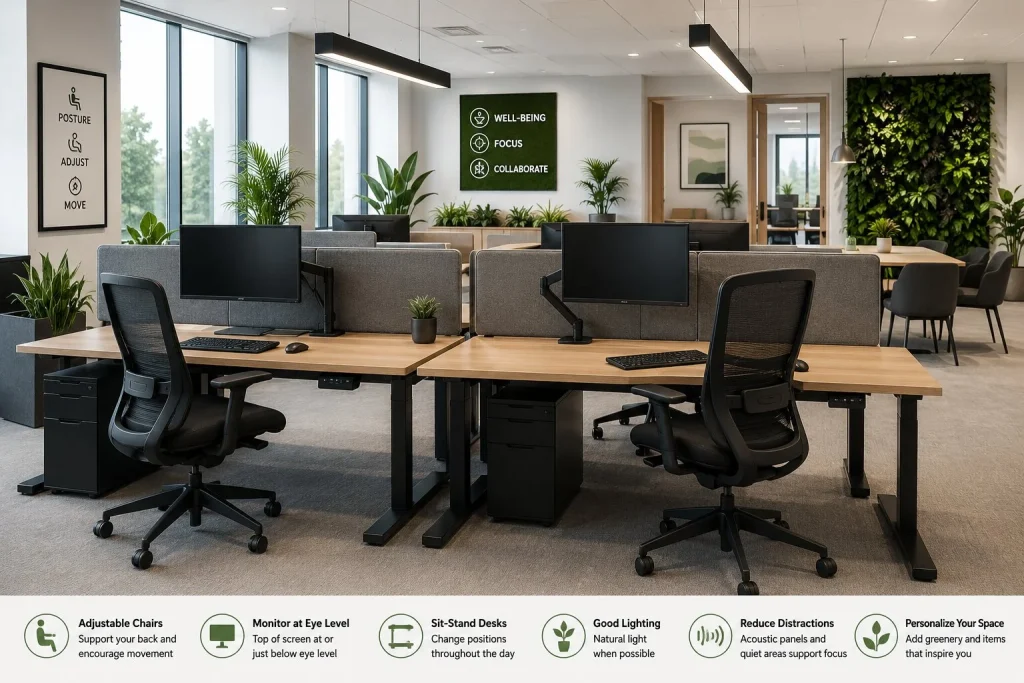
The workplace of the future is flexible, technology-enabled, and centered on employee well-being. Organizations that invest in ergonomics are not only reducing injury risks, they’re creating workplaces where employees are more engaged, productive, and satisfied.
At VSI Risk Management & Ergonomics, Inc., we help organizations build healthier workplaces through comprehensive ergonomic assessments, workstation evaluations, training programs, workplace design consulting, and virtual ergonomic solutions. Whether you’re renovating an office, implementing a hybrid work strategy, or looking to improve employee comfort, our team has the expertise to help you create an environment where people can do their best work.
Whether your focus is office, industrial and manufacturing, laboratory, or healthcare environments, VSI can help with assessments, training, and program management. The future of work starts with designing workplaces that put people first. Investing in ergonomics today leads to healthier employees, stronger performance, and long-term organizational success.
Ready to improve comfort and cut injury risk? Request a workplace ergonomic assessment.
Frequently Asked Questions
What is an office ergonomic assessment?
It’s a structured review of a workstation, covering the chair, desk height, monitor position, keyboard, and posture, with prioritized recommendations to reduce strain and injury risk.
Do you offer assessments for home offices and hybrid workers?
Yes. We provide remote assessments and virtual consultations, so hybrid and work-from-home employees get the same standards as those in the office.
What types of ergonomics does VSI cover?
We work across office, industrial and manufacturing, laboratory, and healthcare environments, from a single assessment to a fully managed ergonomics program.
What does ergonomic training include?
Training covers safe postures, workstation setup, and early-symptom awareness for staff, plus sessions for teams who want to run assessments in-house.
How does an ergonomics program reduce injuries?
A managed program combines risk assessment, corrective action, and follow-up, catching issues early before they become musculoskeletal disorders.